
March 8 is not a day to celebrate, to send us flowers, or to create “special” discounts for women and buy us gifts. We commemorate women’s fight for equality and equity, as well as their resistance against gender-based violence, which affects millions of women, girls, and adolescents in Peru and around the world.
In our country, the figures regarding cases of violence against women are alarming, and they have worsened over the past year due to the pandemic. In 2020, more than 114,000 cases of violence were reported, with 83% of them involving women. Thirty-one percent of reports corresponded to violence against children and adolescents, including 9,582 cases of sexual violence. Likewise, more than 5,500 women went missing in 2020, and in January 2021 alone, more than 400 women, girls, and adolescents were reported missing. Can we imagine the impact that this type of violence has on the health and development of the girls, boys, and adolescents in our country, and how it shapes their lives?
In fact, the WHO, the Department of Reproductive Health and Research, the London School of Hygiene and Tropical Medicine, and the South African Medical Research Council (2013, in UN Women, 2019) have stated that women who have experienced physical or sexual violence from a partner or intimate companion show higher rates of depression than those who have not experienced such violence. Furthermore, we know that depression represents 4.3% of the global burden of disease and is one of the leading causes of disability worldwide, particularly among women (WHO, 2013). Therefore, it is evident that violence is a key factor contributing to depression and suicide risk among women (González-Forteza, Rodríguez, Fuentes, Vega, and Jiménez, 2014, cited in Ramos-Lira, 2014).
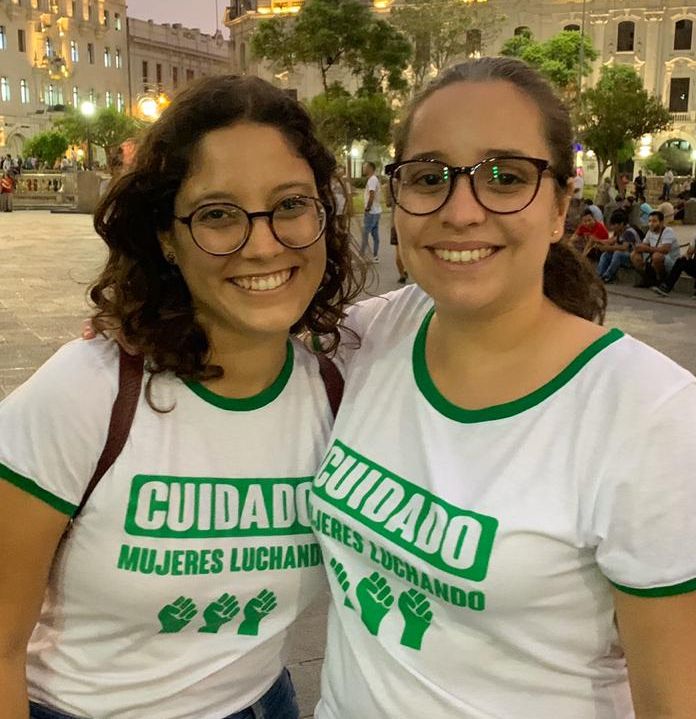
Ana Sofía Carranza and Valeria Lindley, members of the De-mentes team
Furthermore, when a woman, girl, boy, or adolescent experiences violence, it does not only affect that person individually; violence affects the social fabric, social dynamics, and relationships.
We need to develop prevention and intervention proposals to address violence and gender stereotypes from a community-based perspective. To achieve this, we must all get involved, question ourselves, reflect, and work collectively if we want to create changes in our environment.
Let us take this March 8 as an opportunity for reflection, inform ourselves, and continue working toward a more inclusive, equitable, and violence-free country.
#EveryoneForMentalHealth #8M